Who’s afraid of the Big Bad Wolf? The story of moral panic and how it spreads

Many times, a moral panic is an exaggeration of a social challenge that does exist. It’s often based on real events, but the story is blown out of proportion, especially compared to other, more serious, problems. When something becomes a moral panic, we’re inspired to act fast, often without careful consideration or scrutiny of the narrative we’re fed. Its moral nature can more easily justify a harsh response because the stakes feel so high. This can lead to hasty or bad decisions, which can end up doing far more harm than good. 

It’s important that we can identify the signs of a moral panic, so we can respond appropriately. Using a diagnosis tool with embedded ethical questions, like the steps below, can help us think critically about what we are being told. We can think about which bits might be exaggerated or amplified, and whether the solutions offered will actually address the core issue. 

Soccer Looks Different When You Can’t See Who’s Playing

Gregory hopes that measuring unconscious bias will be a step toward changing conversations about Black athletes. “Last year there were all these discussions around Black Lives Matter, and there were player protests,” he said. “Obviously the issues off the pitch were more important than the issues on the pitch, but it does feel like even when that conversation was happening, there was very little discussion about racial bias in the way we talk about players.”

The study also examined attitudes toward gender by showing viewers a pair of two-minute clips, one from the American top-flight National Women’s Soccer League and another from League Two, the English men’s fourth tier. Even though the NWSL draws more fans to games, its average player earns about a quarter as much as the average player in League Two. Gregory and Pleuler were curious whether this “clear gender pay gap” could be explained by a difference in the quality of the soccer shown on TV, as some have argued.

People who watched the broadcasts said that the men’s game was “higher quality” by a 57 percent to 43 percent margin. Those who saw the renders with genderless stick figures preferred the women’s match, 59 percent to 41 percent. The results weren’t statistically significant across a small sample of 105 mostly male respondents, but Pleuler believes the line of research is promising. “I think these results are suggestive that your average soccer fan can’t tell the difference between something that does have a large investment level and the women’s game, which does not,” he said.

A photo illustration of two soccer players, where identifying features have been removed.

NATURE VS. NURTURE VS. UH, NANURTURE?

One particularly striking examples of a gene/environment interaction is illustrated in a few studies, one of which was conducted by Tucker-Drob et al. In this study, the heritability of genes that influence IQ was investigated in subjects at 10 months and 2 years of age. Heritability refers specifically to how strongly genes influence the variability of a trait passed on. In this case, researchers are interested in heritability because it gives insight into how much genes are determining why humans have higher mental ability than other humans and not why humans have higher mental ability than dogs. The researchers in this study found that at 10 months genes accounted for little to no variation in mental ability across all subjects. However, at 2 years, genes accounted for nearly 50% of the variation in mental ability of children raised in high-SES homes. However, at 2 years old, genes still accounted for little to no variation in mental ability of those subjects raised in low-SES homes2. Socio-economic status, a human construct and truly environmental influence can determine whether or not a person’s cognition can be affected by genetic influence. A low-SES environment can result in a lesser influence and therefore less ability to reap any heritable benefits.

Who’s the deviant here?

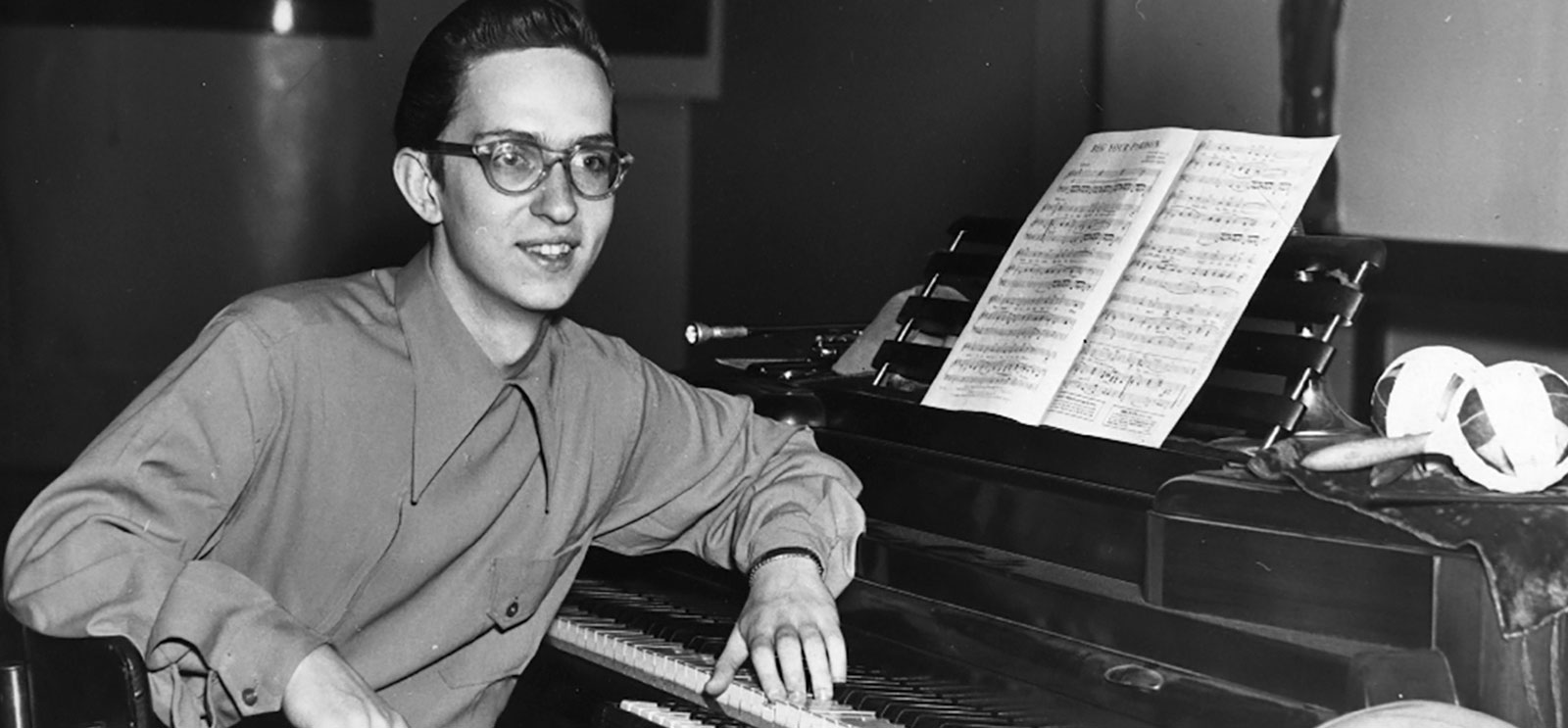
In 1948, 19-year-old Howard S. Becker was playing piano in a bar on West 63rd Street six nights a week. He was also a graduate student in sociology: “I thought, well, if I write down what happens there, those are field notes.” Becker’s (PhB’46, AM’49, PhD’51) early observations about jazz musicians eventually grew into the groundbreaking Outsiders: Studies in the Sociology of Deviance (Free Press of Glencoe, 1963), one of the first books to establish “labeling theory.” Deviance, that theory held, was not an innate quality of someone’s actions, but an interaction between the so-called deviants and those who labeled them that way.

Becker argued that deviants are not simply breaking rules set down by mainstream society (“squares,” in jazz musicians’ argot). Instead, musicians and other deviants follow different, but often equally strict, rules of their own. In July the University of Chicago Press will reissue the Outsiders chapter “Becoming a Marihuana User” (originally published in 1953 in the American Journal of Sociology) as an 88-page book.

https://mag.uchicago.edu/law-policy-society/whos-deviant-here

Gender is queer for everyone

Gender is queer. By which I mean irredeemably strange, ungraspable, out of sync with “male” and “female,” weirdly not normal, since lived gender fails to conform to normative ideals and expectations, even when it is played quite straight. Conventional views try to snuff this strangeness, yet conventional views are strange.

Lived gender fails to conform to ideals and expectations, even when it is played quite straight.

Try this on for a very queer idea: raise two human beings to think they’re opposites; give them opposite traits to embody; establish different mindsets, behaviors, and interests; offer them opposite aesthetics to pursue. Then ask these opposites to live together, love together, parent together as they raise little opposites; call this “marriage as it was intended”; call this “normal” gendering. Isn’t this strange?

Gender is also made of things that are not gender: race and money. Gender is fundamentally raced and classed in these United States. The history of the concept “gender” bears this out, in ways that may amaze you. When we know this history, stressing race and money, the notion of “opposite sexes” falls apart. In fact, the notion of there being “two sexes” forcefully crumbles.

https://bostonreview.net/race-gender-sexuality/kathryn-bond-stockton-gender-queer-everyone

Gender Is Queer for Everyone

Explaining 21st-Century Capitalism in a Way Everyone Can Understand

For capitalism, markets provided the means to secure its crucial ratio: the difference between the value paid for labor power (the wage) and the value added by the laborer’s work effort. That difference is the prerequisite for surplus value to be produced by the productive laborer and then appropriated and socially distributed by the capitalist.

Profit maximization and markets were always carefully limited and designed to serve the reproduction of capitalism. That is how markets evolved once the capitalist organization of production and distribution displaced the systems of slavery and feudalism that preceded it. Those other systems had either rejected markets or else shaped markets to reproduce those different, noncapitalist systems. Only a narrow, ideological fundamentalism raises markets, profits, or capitalism itself to a status above history as if any of them had the power to stop the flow of change.

Discrimination based on your name alone is a stubborn reality in Britain today

Published earlier this month, and based on 83,000 applications to real job adverts from over 100 of the largest US employers, a study by Patrick M. Kline and colleagues shows beyond doubt that “distinctively Black names reduce the probability of employer contact”. Perhaps surprisingly for otherwise reserved economists, their findings move them to call out what they term “systemic illegal discrimination”.

In the UK, meanwhile, studies that tested for racial discrimination in recruitment processes have shown that “people from ethnic minorities were less likely to be successful with their applications, even discounting differences such as age and education”. While this relates only to the early, pre-interview stage of the recruitment process, researchers had to send out 74% more applications for minority-ethnic candidates compared with white candidates.

https://www.theguardian.com/commentisfree/2021/aug/04/name-racial-discrimination-britain-racism-law

Workplace Discrimination Based On Names | Asian Fortune

How Paul Gilroy became the most vital guide to our age of crisis

His first book, There Ain’t No Black … , published in 1987, was like a little grenade thrown into the discourse. His targets included English Marxists who couldn’t understand the importance of thinking carefully about race; sociologists who portrayed Britain’s black population as either victims or criminals; the “new racism” of Thatcher’s Britain; and even the GLC, his old employer. In the book, Gilroy took riots and social movements to be as politically significant as any political party or trade union. “My brain kind of cracked open when I read it,” Ruth Wilson Gilmore, the celebrated American theorist of prison abolition, told me.

It is the second chapter that furnished the ideas that would, during the Parekh affair, offend the rightwing press. Gilroy marshalled a long list of examples – pervasive phrases such as “the island race” and “bulldog breed”; the way politicians spoke about immigrants as aliens; laws that privileged immigrants with a grandparent born in the British Isles – to argue that race and nation were enmeshed in the British psyche. The government’s obsession with repatriating “illegal immigrants” was further evidence. Deportation, he wrote acidly, “assists in the process of making Britain great again”.

Most powerfully, Gilroy treated Britain’s Caribbean settlers not as a problem to be solved, but as people whose culture offered sophisticated readings of the world. He saw the soundsystem culture of reggae and dub – whose body-shaking bass frequencies could be heard, and felt, in parties across London – as harbouring a radical critique of the modern world. Darkened dance halls transported revellers out of the oppressive present, while the music’s lyrics punctured the drudgery of labouring under capitalism.

https://www.theguardian.com/news/2021/aug/05/paul-gilroy-britain-scholar-race-humanism-vital-guide-age-of-crisis

Paul Gilroy - Wikipedia

A Theory of Thorstein Veblen

“Like his fellow economists, Veblen was excited by the prospect that, after Darwin, the study of human society could be placed on a scientific footing. Unlike most of his colleagues, he did not think the economic system was working. In one way or another, they maintained that an economy metes out its own rewards in proportion to the productivity of those who constitute the economy. For Veblen, it was not the fittest—that is, the most productive—who were surviving and prospering. On the contrary, the winners were a “leisure class” of unproductive parasites devoted to what he called “conspicuous consumption.” In the process, they were damaging rather than serving the interests of society as a whole. This was, to speak in rational terms, inefficient and irrational.”

https://thebaffler.com/latest/a-theory-of-thorstein-veblen-robbins

Thorstein Veblen - Wikipedia